All enterprises need to transform and innovate to thrive in the future. Increased use of automation is a key part of making that happen. Yet, if the wrong objectives are set, there is a risk of implementing the wrong automation, leading to bad outcomes and failed transformation.
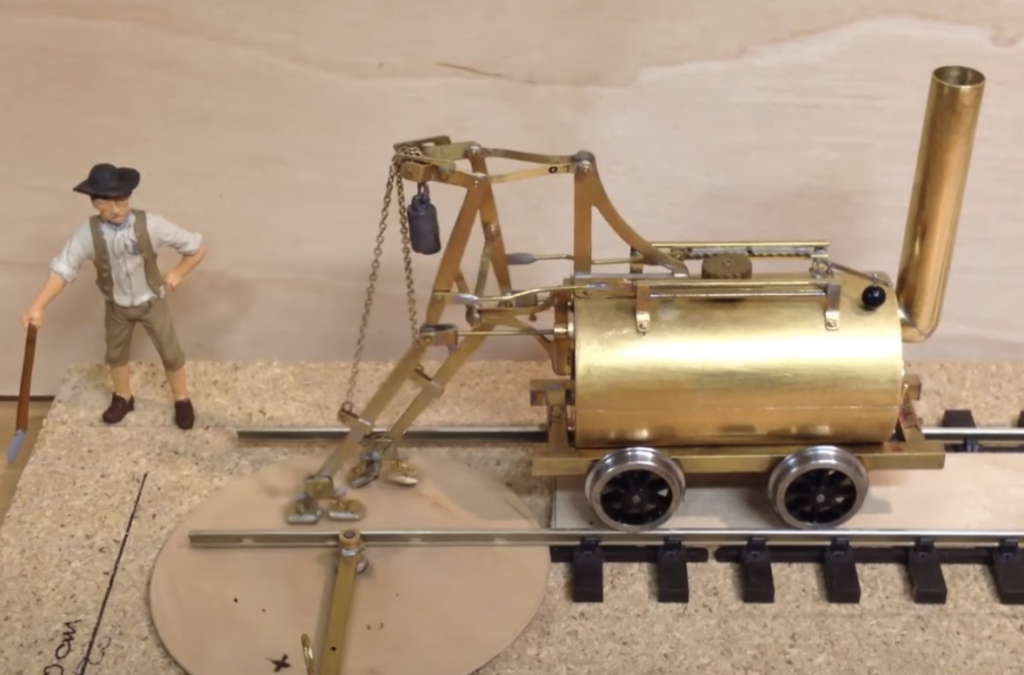
This one is a bit of fun. This week I was sent an excellent video clip of a very strange model steam engine. Don’t panic, I’m not a train geek at all, but the video was awesome on two fronts:-
- Firstly, it’s a really interesting true story. Apparently an inventor really did build an engine which pushed itself along by powering metal legs. That really happened. And – bad outcome – it killed a bunch of people. When you get to the bottom of this article you can read a little summary of William Brunton’s Mechanical Traveller or Steam Horse.
- However, the next interesting point for me was seeing the fully working model engine. A model steam engine pushed by metal steam-powered legs. I saw the video on YouTube and it made me think: What a great analogy for badly formed automation, incorrectly directed innovation, and failed transformation. We can all learn from this.
This article uses snippets from the video of the Steam Horse to illustrate bad automation, and how real transformational automation can only come from aiming to achieve new outcomes. It never comes from simply automating your current activity for the current outcome.
Small Diversion: Linking Topics…
I realised that writing about this was also tying together some other articles I’ve written here. This is where Digital Transformation, Automation and Outcome-driven-Innovation all start to converge:-
- The most relevant reading is my fictional story of how, by giving a team autonomy to achieve an outcome, not a directive to hit an activity-performance metric, that team added new technology, innovated, and ultimately transformed the entire business from the bottom up.
- That of course connects to the more recent article about how ITSM and ESM enable Digital Transformation, reaches from the bottom up, to achieve business strategy goals. (We’re in the world of ‘Operational Digital Transformation’ here today).
- And, of course, much transformative innovation comes from… Automation. Read about the 3 layers of Process, Workflow and Automation here. I’ll be writing more about Automation.
- And then, how do you set and progress the objective of reaching new outcomes, step by step, quarter by quarter? How do you actually execute? You’ll want to read about the Objectives and Key Results model here.
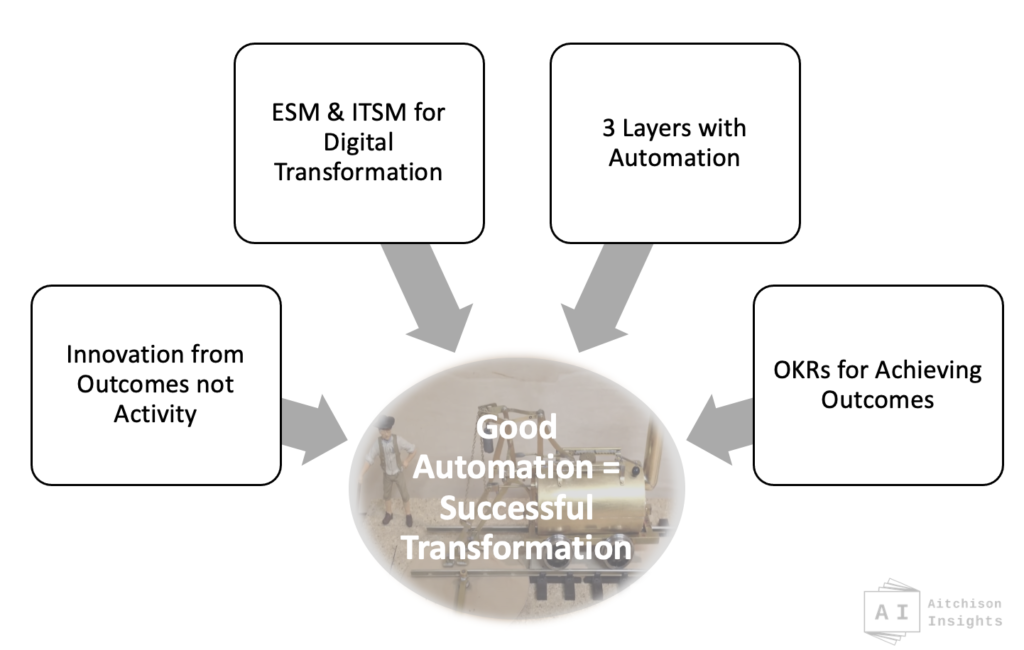
Wow. It almost looks like this was a very carefully planned article structure.
Anyway, back to the example of the Steam Horse and how implementing the wrong automation leads to bad outcomes and failed transformation.
Avoiding The Wrong Automation.
There are two pitfalls when you look to automate work.
1 – Don’t Automate for Achieving Increased Activity
If your measure of success remains activity metrics, then automating to achieve only those activity metrics can encourage bad automation
Let me explain. Imagine a business moves people and things from one place to another. And the measure of success is Activity based. “your goal is to take 10,000 steps. We know that will always get us from A to B”
Leadership announce: “it’s time to Transform our business. Innovate! Automate! Achieve your activity goals faster!”
Team : Uh, OK. So, we built this! 10,000 steps, faster – steam-powered!
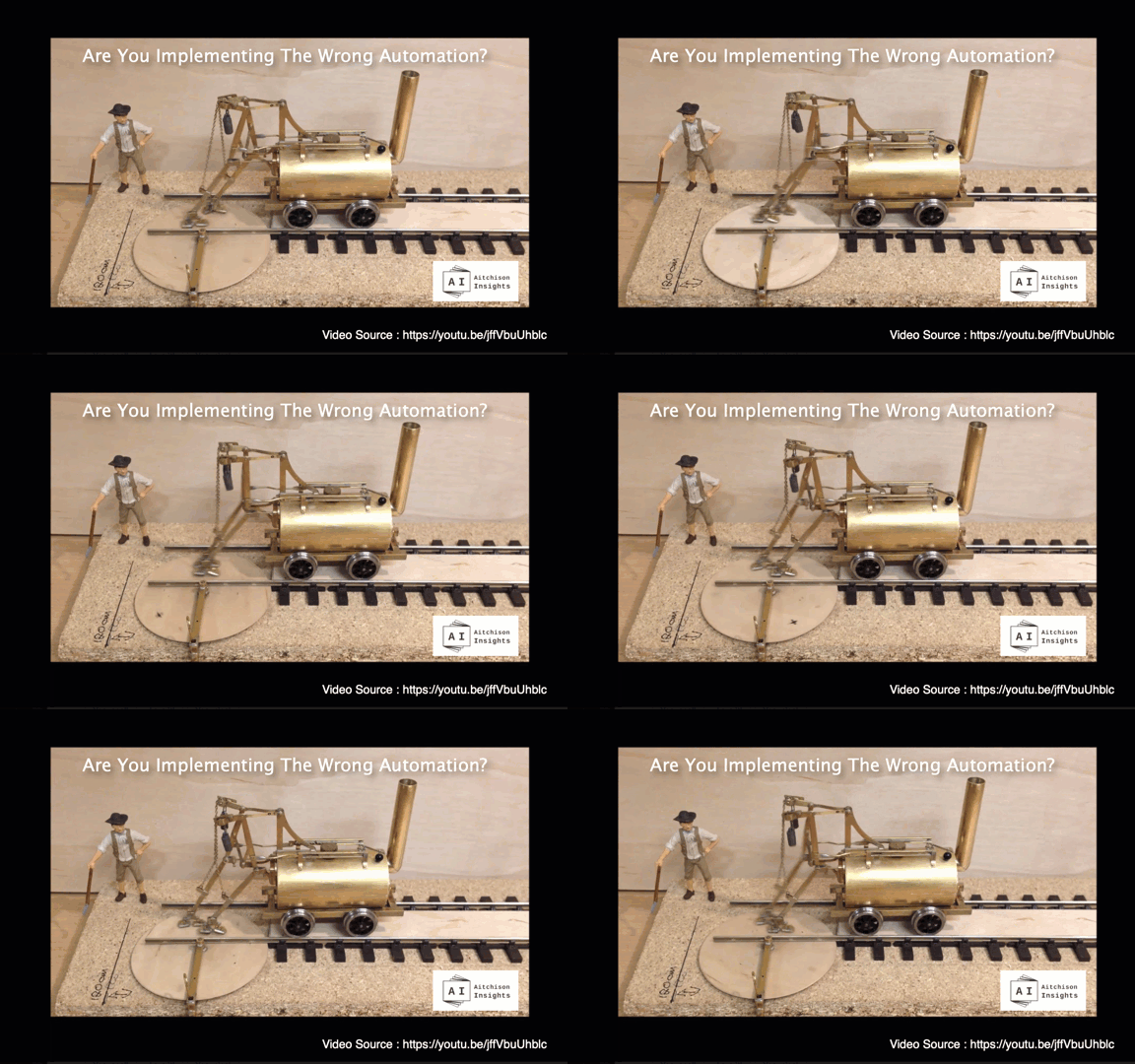
Leadership: “Doh! No, that’s no good, that’s just hacking work to automate repetitive activity and failing to achieve any good business outcome.
2 – Don’t Automate for Old Outcomes
If your focus is on Automating only to achieve the same, original outcome, you still may fall behind and lose competitive edge.
Leadership: “Change of plan. I read that article on AitchisonInsights. We need to focus the team on achieving an Outcome, using innovation and automation. The outcome we want to achieve is – of course – to have our customers moved from A to B just like we do today, only with automation!”
Team: Can we have any new technology?
Leadership: “No”.
Team: “OK, we repurposed what we have and we automated it to achieve the outcome!”.
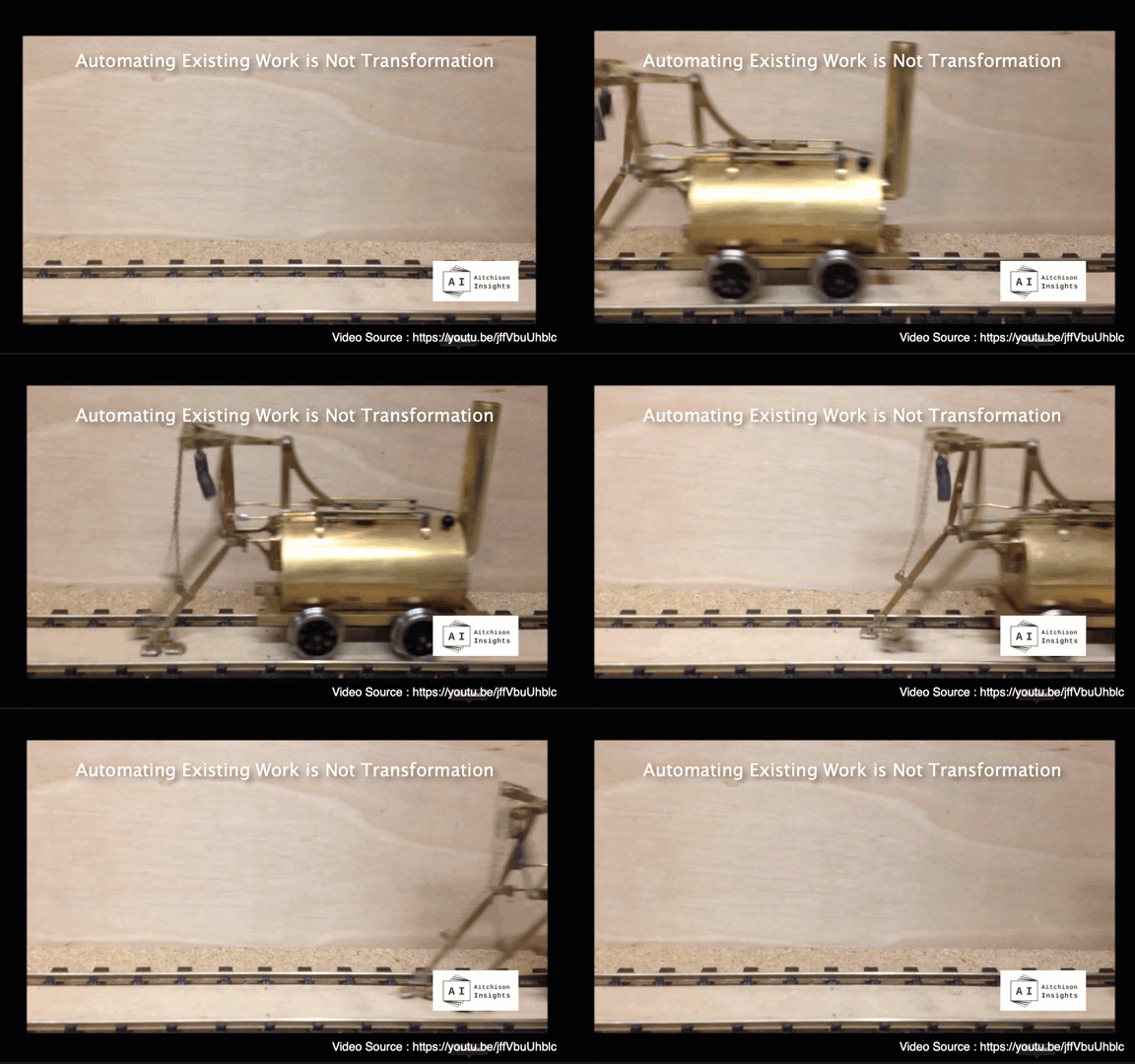
Leadership: “Yikes! Well, I guess the outcome is achieved, but we’re doing it the OLD WAY, just faster“.
(and there’s a risk it might blow up and kill people – see story at bottom).
Although there is value in speeding up the same activity – time is money, of course – true improvement is about the end result being better whatever that may be.
And watch out, because if you only listen to your current existing customers who live in the world of ‘current outcomes’, you will very likely build to this end result.
Although this article isn’t about Product Management, all good Product Managers know the famous quote from Henry Ford. “If I’d listened to my customers I would have built a faster horse” Well, this Steam Horse takes that further. If the goal of Automation was only to achieve the current goals faster, you’d build a Steam Horse.
The Transformational Zone
Of course, where we want to get to is the transformational zone. Where the application of new technology actually improves the purpose, outcome and the experience of doing work. Changes the work that people do. This is the difference between automating to achieve an activity metric, automating existing processes, and true automation for transformation.
Leadership: “This time, let’s look at our strengths, look at new technology, talk to our customers, look at our competitors. The outcome we seek is to grow our business, increase revenues, and win more new customers. Feel free to do experiments, do prototypes, be creative, let’s see what you come up with”
Team: “Yeah, OK, forget all that steam engine nonsense. We came up with this”
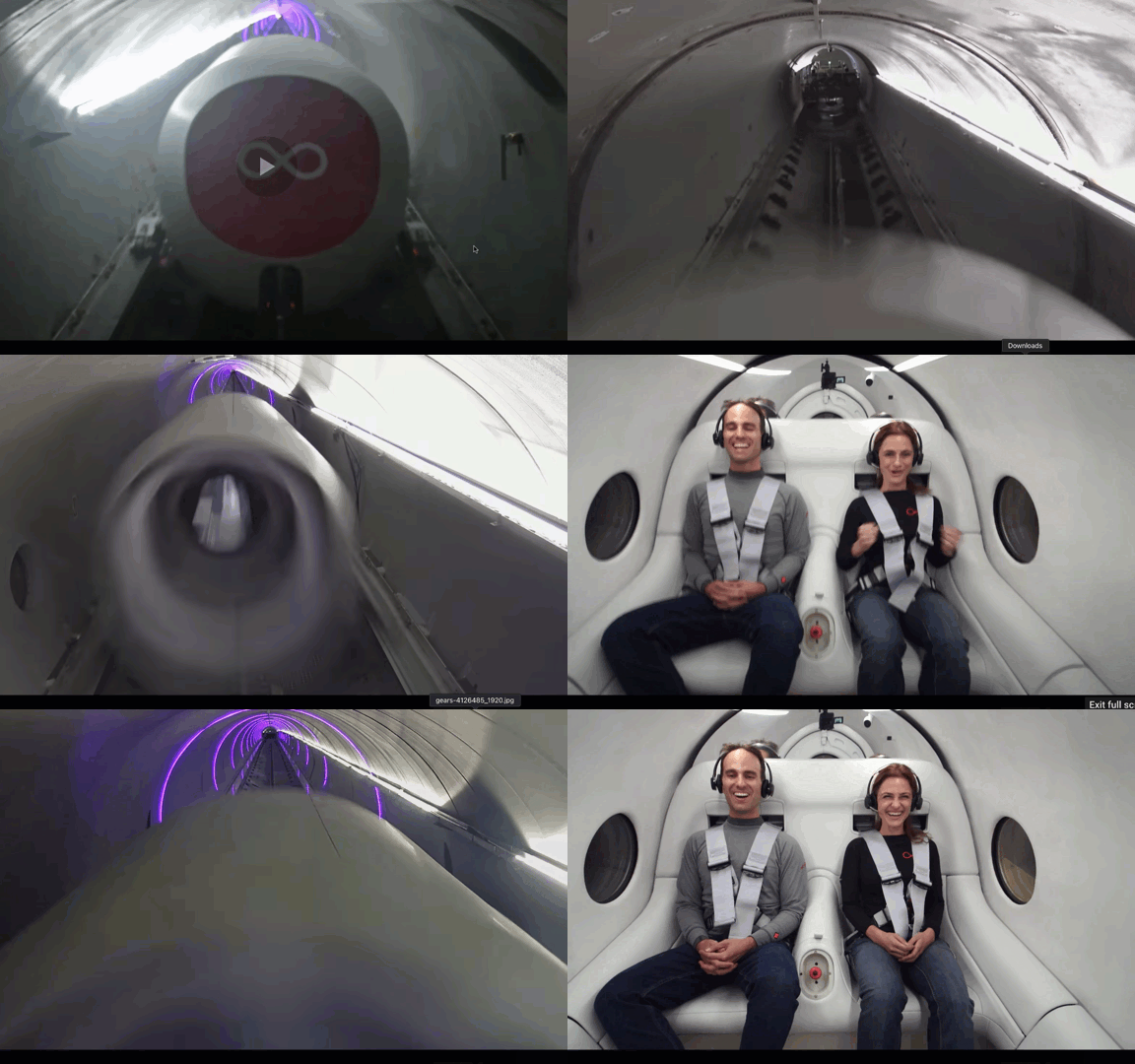
Source https://www.youtube.com/watch?v=xKvbSboQ5_g
That seems better, right? Notice the smiles on customers faces. That’s the end goal of this whole thing. A delightful user/customer experience. The smile that wins customers, demonstrates value, and beats competitors.
So there we have it. Lighthearted analogies of how implementing the wrong automation leads to bad outcomes and failed transformation. Hopefully this inspired some thought, or made you smile. Did it make sense? Have you ever seen any automation Steam Horses? Let me know in the comments below, back on LinkedIn or in Twitter.
Oh, and one more thing…
Addendum: The Story of The Mechanical Traveller or Steam Horse.
You can read more elsewhere, but here’s a little summary.
It was originally thought that the very first early use of steam engines with steam-powered metal wheels would never have the traction required to pull heavy loads. William Brunton worked at a colliery (coal mine), and he invented a steam engine which did not spin its wheels. Instead it powered legs, which pushed the engine from behind, step by step. He called it the Steam Horse, or Mechanical Traveller.
The first prototype worked, so William made a bigger and better one. He launched it with a public demonstration in 1815 where – through a human error over tightening a valve – the engine exploded and killed 11 people and injured 46 others.
And that was the end of that.
Watch: The model Mechanical Traveller video here in youtube (by ‘Adrian’s Stuff’).



0 Comments