If I was to recommend one operational change to look at in 2021, it would be adopting the Objectives-and-Key-Results (OKRs) model for ITSM/ESM Service and Product delivery success.
This is following on from the previous article: Focus on Outcomes for Execution and Innovation. That described how focussing on achieving outcomes over measuring activity can lead to success and innovation.
Now, here we look what can be used to define, measure and achieve those outcomes – the OKR model.
(disclaimer : no, I really do make nothing at all from this recommendation topic or any links on here. This is 100% just opinion, not in any way a formal promotion).
Why OKRs?
From what I have observed in action, OKRs work and they work really well, yet many individuals, teams and organisations are not yet using the OKR model. It is being picked up in software product vendor organisations but seems to have not made it further yet. Particularly it is not yet visible in ITSM. If you are not using OKRs already then you have a great opportunity within easy reach to make a difference.
So What Are OKRs?
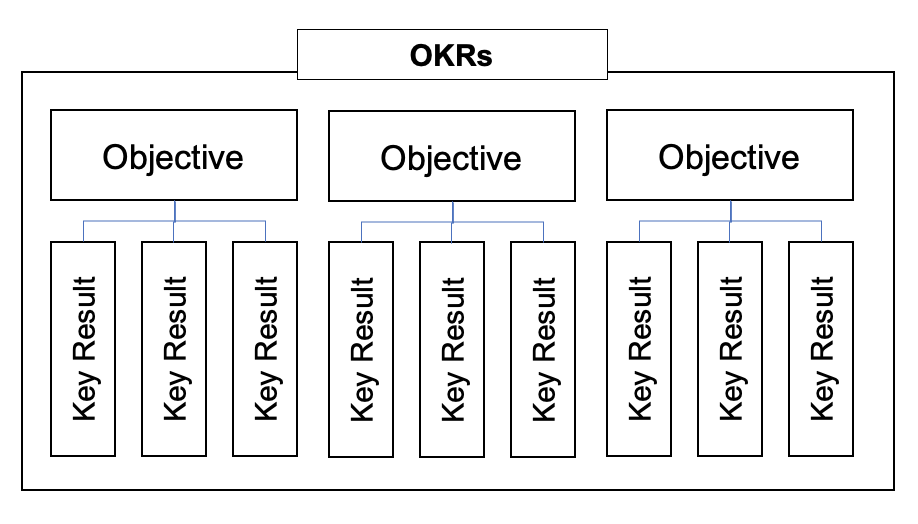
OKR stands for Objectives and Key Results. They are a simple yet effective and proven method of planning and executing on coordinated service, product or business execution and improvement. They contain some new ideas, a few familiar concepts that exist elsewhere, but they combine in a unique way.
The OKRs model first started in tech companies, with names including Intel, Google, Uber and Amazon. Although initially focussed on Business and Product Management, they are a perfect – but little implemented – addition into ITSM and service improvement working practices.
What Makes Them Special?
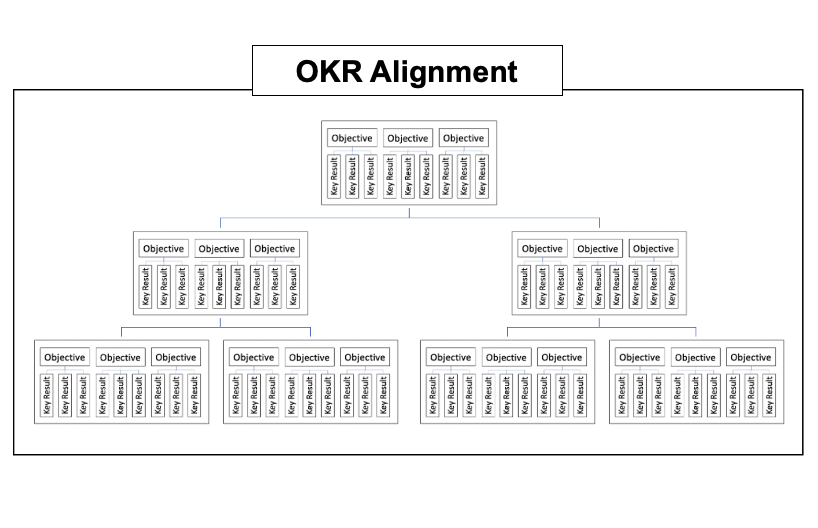
OKRs are outcome based. They fit well with a focus on improving experiences. They are also time-constrained, measurable, collaborative and inclusive. OKRs can encourage entrepreneurial and creative mindsets, yet also matching with an alignment to wider business goals. They are easy to understand.
OKRs get work done. they bring teams together. they provide an outcome focussed business mindset.
How Do OKRs Work?
Well… That needs more time and space than this little intro article :-).
So, I have a separate article on Implementing Real-World OKRs coming soon. For now, you could go read the book Measure What Matters
Are They Relevant To You?
If you following ITSM and ITIL already, you are already very close. ITIL4 doesn’t seem to reference OKRs directly, but they seem like an almost perfect fit, turning ambition into execution
If you are a product leader and you have product teams that are not already working with OKRs then you are missing a trick and putting your delivery at risk.
If you are a product manager working directly with a product team, maybe struggling to get common view of priorities, these are your magic tool to bring everything together and shine.
How To Get Started
Want to get started adopting OKRs for ITSM acceleration?
1 Google ‘OKRs’. There’s a ton of good stuff out there. Just remember, where they might say Product, you can also read ITSM / ESM Service.
2. Get excited about reading my coming-soon article : Implementing Real World OKRs… Read that once it’s published. Edit : It’s published.
3. Go read the book Measure What Matters
4 Agree to have a go. Plan to start using OKRs, even at a single team level initially to try the concept out.
5 Then set your timescale, agree the Objectives for that timescale, brings the team(s) together, brainstorm and agree the Key Results that can be measured to demonstrate that the Objectives have been achieved.
6 Start with a routine! Rollout a regular progress-review schedule.
Thoughts?
There’s a load more to it than this of course. Look for more words coming soon. I’m probably going to write quite a lot about these.
I’d love to hear your thoughts – have you seen success with OKRs? In Product Management or in Service Management? Have you seen success or failure? Do you have questions? Let me know in the comments below, or back on LinkedIn or Twitter.
Image by Darwin Laganzon from Pixabay



1 Comment
Implementing Real World OKRs | Aitchison Insights · 1 February 2021 at 4:34 pm
[…] It also builds upon two previous articles : Outcomes over Activity and OKRs for Execution. […]